The global CNC machining industry is undergoing a profound transformation in 2026. Driven by advances in artificial intelligence, tightening sustainability regulations, and shifting supply chain dynamics, manufacturers worldwide are rethinking how parts are designed, produced, and delivered. From AI-powered toolpath optimization to hybrid additive-subtractive platforms, these changes are not incremental—they represent a fundamental shift in what modern machining looks like.
According to Fortune Business Insights, the global CNC machining market reached $108.58 billion in 2025 and is projected to grow to $251.61 billion by 2034, representing a compound annual growth rate (CAGR) of 11.10%. Asia-Pacific accounts for over 50% of global output, with China alone holding more than 35% of the regional market. Meanwhile, North American buyers searching for China-based sourcing partners increased by 212% between 2023 and 2025, according to data from Haizol’s 2026 China CNC Machining Industry Report.
Here are the five key trends defining the CNC machining landscape in 2026.
1. AI-Native Machining Goes Mainstream
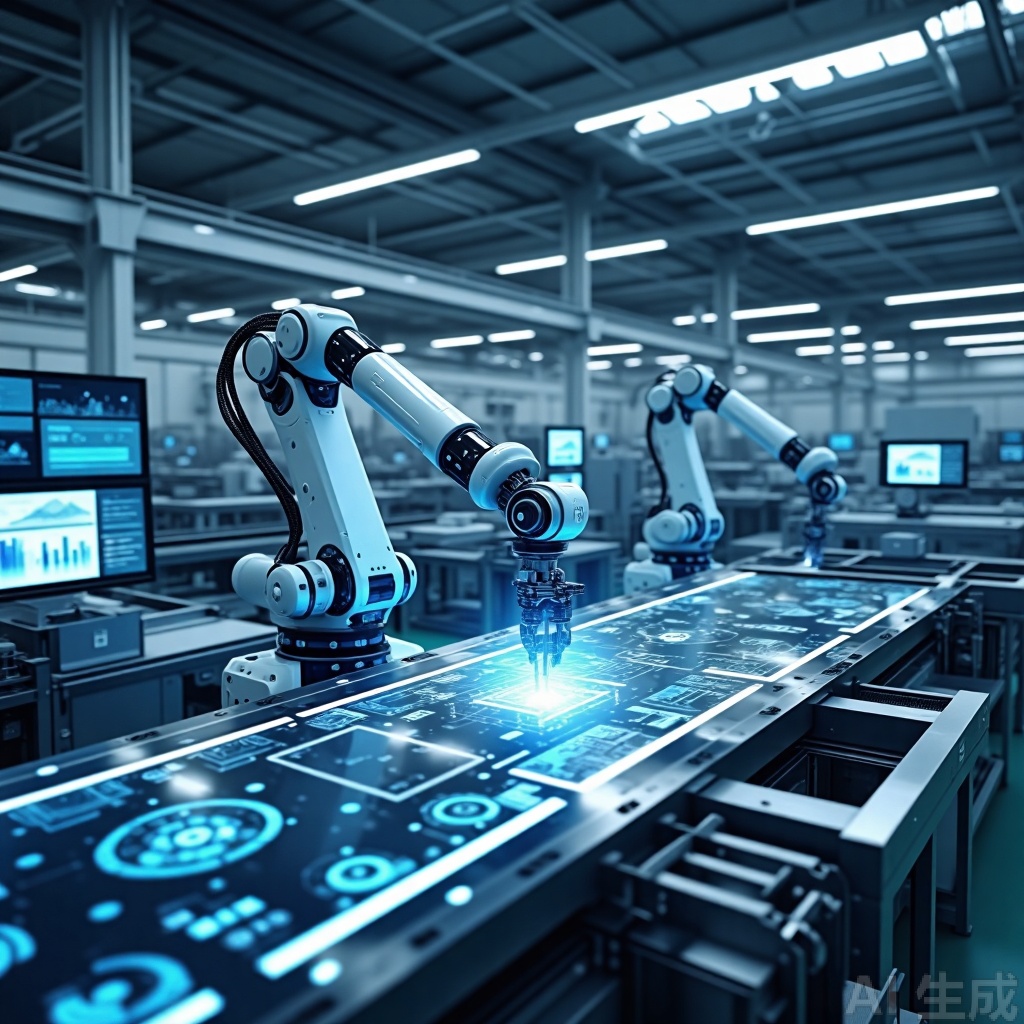
Artificial intelligence has moved beyond experimental pilots and isolated monitoring tools to become an integral part of daily CNC operations. In 2026, AI-driven systems use real-time sensor feedback to automatically adjust feeds, speeds, and toolpaths in response to vibration, load, and temperature changes. This adaptive approach delivers more consistent surface quality, extends tool life, and significantly reduces unplanned production halts.
The performance gains are measurable. AI-optimized toolpaths reduce cycle times by 15–25%, while predictive maintenance systems achieve approximately 95% accuracy in identifying spindle and machine failures before they cause downtime. AI-assisted CAM programming can cut programming time by up to 40%, enabling shops to take on more complex work with shorter lead times.
The shift requires manufacturers to rethink workforce roles. Operators of the future will spend less time reacting to machine alarms and more time validating data patterns, tuning algorithms, and improving process reliability. The most competitive shops are those investing in integrated AI-CAM-controller ecosystems and upskilling their teams for data-focused machining workflows.
2. Digital Twins Become the Production Backbone
Digital twin technology—once considered a buzzword for simulation—has matured into a production-critical tool. Modern digital twins create continuously updated virtual replicas of entire machining processes, integrating design, process engineering, machining, and inspection into a single synchronized model.
The practical benefits are substantial. Virtual commissioning and clash detection eliminate costly setup errors before physical production begins. Kinematic validation ensures that multi-axis toolpaths will execute correctly on the actual machine. Factories are pairing digital twins with mixed-reality tools for virtual training and remote support, reducing dependence on a shrinking pool of expert operators.
Crucially, real machining data feeds back into the virtual model through a closed loop, continuously refining simulation accuracy over time. This creates a self-improving system where each production run makes the next one more predictable and efficient. For shops handling complex, custom, or high-precision parts, digital twin technology has shifted from “nice to have” to essential infrastructure.
3. Hybrid Manufacturing Moves into Production
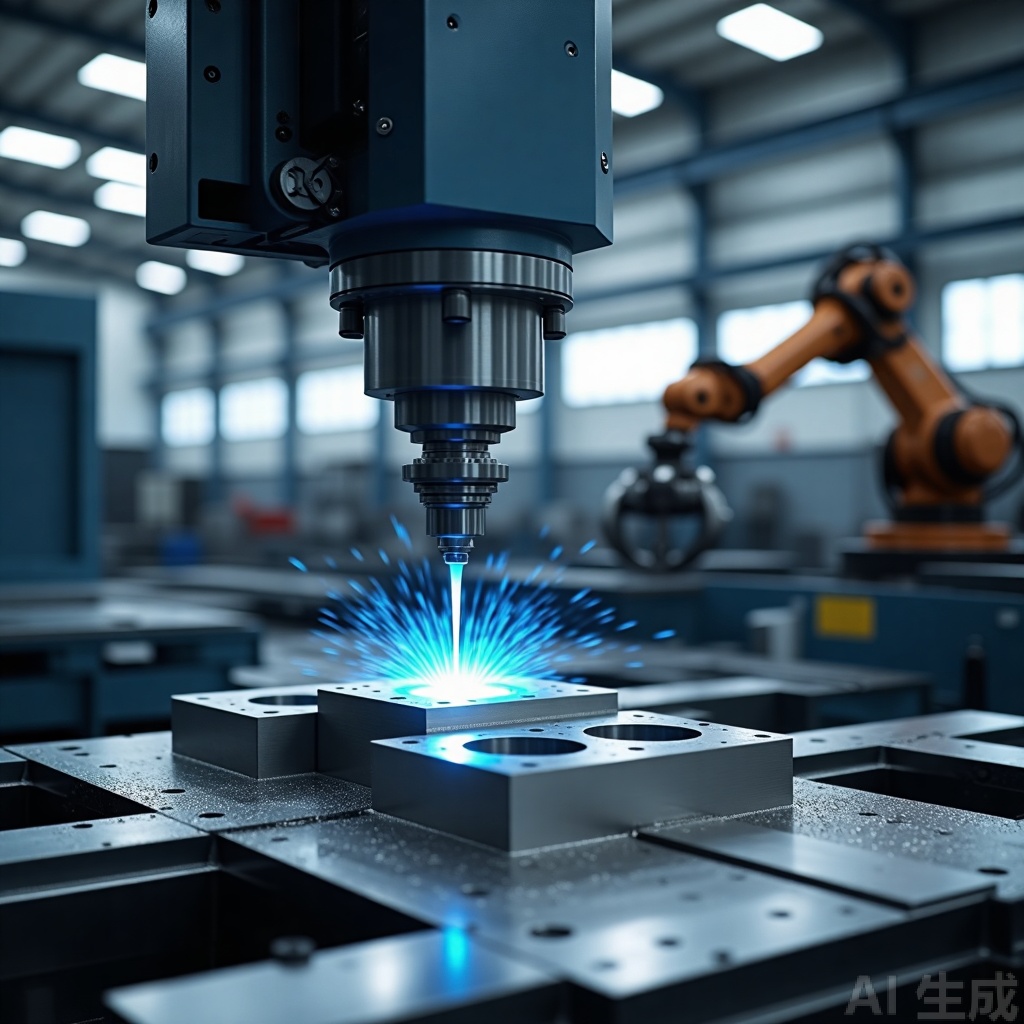
The convergence of additive and subtractive processes is one of 2026’s most significant technical developments. Hybrid manufacturing platforms that combine metal deposition (additive) with CNC cutting (subtractive) are gaining real traction in aerospace, energy, medical, and maintenance-repair-overhaul (MRO) sectors.
Hybrid approaches address two persistent industry challenges. First, material waste: additive builds near-net shapes while CNC machining finishes only critical features, dramatically reducing raw material consumption. Second, geometric complexity: hybrid processes enable internal cooling channels, lattice structures, and conformal cooling paths that are impossible to produce through conventional cutting alone.
The technology introduces new workflow challenges, including managing heat-affected zones, working with unfamiliar alloys, and machining irregular additive surfaces. However, early adopters are already seeing shorter lead times, fewer setups, and the ability to produce lighter, more efficient, and more customized components. As customer demand for these capabilities grows, hybrid manufacturing expertise is becoming a significant competitive differentiator.
4. Sustainability Becomes a Core Production Metric
In 2026, sustainability is no longer limited to corporate ESG reports—it is embedded directly into machining KPIs. Environmental performance is now tied to operational efficiency and customer value, with major OEMs requesting carbon-footprint data per part from their supply chain partners.
The adoption of sustainable practices is accelerating across the industry. Minimum Quantity Lubrication (MQL) and dry cutting techniques are becoming standard. Coolant recycling systems are now expected in shops serving major automotive and aerospace programs. Machine tools are being redesigned for lower idle power draw, with energy-efficient models reducing consumption by 30% or more. Standardized recycling programs for high-value materials like titanium and nickel alloys are also gaining widespread adoption.
For manufacturers, the business case is clear. Optimized toolpaths, reduced rework, and energy-efficient operations cut costs while strengthening credibility in global supply chains. Shops that can measure and report sustainability metrics alongside traditional quality and throughput data will have a decisive advantage in securing contracts with sustainability-conscious buyers.
5. Automation and Reshoring Drive the New Manufacturing Economy
Labor shortages, geopolitical risks, and logistics disruptions have accelerated the reshoring trend, with manufacturers bringing production closer to their end markets. The American Society of Mechanical Engineers (ASME) projects a shortfall of 2.1 million manufacturing workers in the United States by 2030, and 65% of machine shops report difficulty finding qualified CNC operators. These pressures are driving heavy investment in automation.
Robot-tended CNC cells, automated pallet changers, and self-calibrating tool presetters are becoming standard equipment. The goal for many facilities is “lights-out machining”—continuous, unmanned production supported by smart scheduling and remote monitoring. Automated cells achieve spindle utilization rates of 85% or higher, compared to approximately 50% for conventional setups, effectively increasing productive hours from 40 per week (single shift) to 168 per week (continuous operation).
This wave of automation is designed to amplify skilled labor rather than replace it. A single technician can oversee several machines, interpret analytics, and manage exceptions rather than performing repetitive loading tasks. Success requires full data integration: machines, planning systems, and inspection devices must share a common data language to automatically track part quality, utilization, and tool wear.
Looking Ahead
The CNC machining industry in 2026 is defined by integration and insight. The most successful factories treat every machine cycle as a data event—captured, analyzed, and used to improve future cycles. 5-axis machine adoption is growing at a CAGR of 10.8%, roughly twice the rate of 3-axis systems, reflecting the industry’s shift toward more complex and precise manufacturing capabilities.
For buyers sourcing CNC machined parts, these trends translate into shorter lead times, higher quality consistency, and more competitive pricing. For manufacturers, the message is clear: investing in AI-driven workflows, digital twin technology, sustainable practices, and connected automation is no longer optional—it is the price of remaining competitive in a rapidly evolving global market.
Avada Tools is a China-based CNC machining manufacturer offering precision CNC milling, turning, and custom fabrication services. Contact us to discuss your next project.
about
avada factory
Avada Tools is an ISO 9001-certified CNC machining manufacturer based in Yongkang, China. Since 2012, we have delivered precision custom metal parts and manufacturing solutions to clients across 40+ countries worldwide.