Introduction
Selecting the right material is one of the most consequential decisions in any CNC machining project. The material you choose directly affects part performance, manufacturing cost, surface finish quality, corrosion resistance, and lead time — yet many buyers leave this decision entirely to the manufacturer without understanding the trade-offs involved.
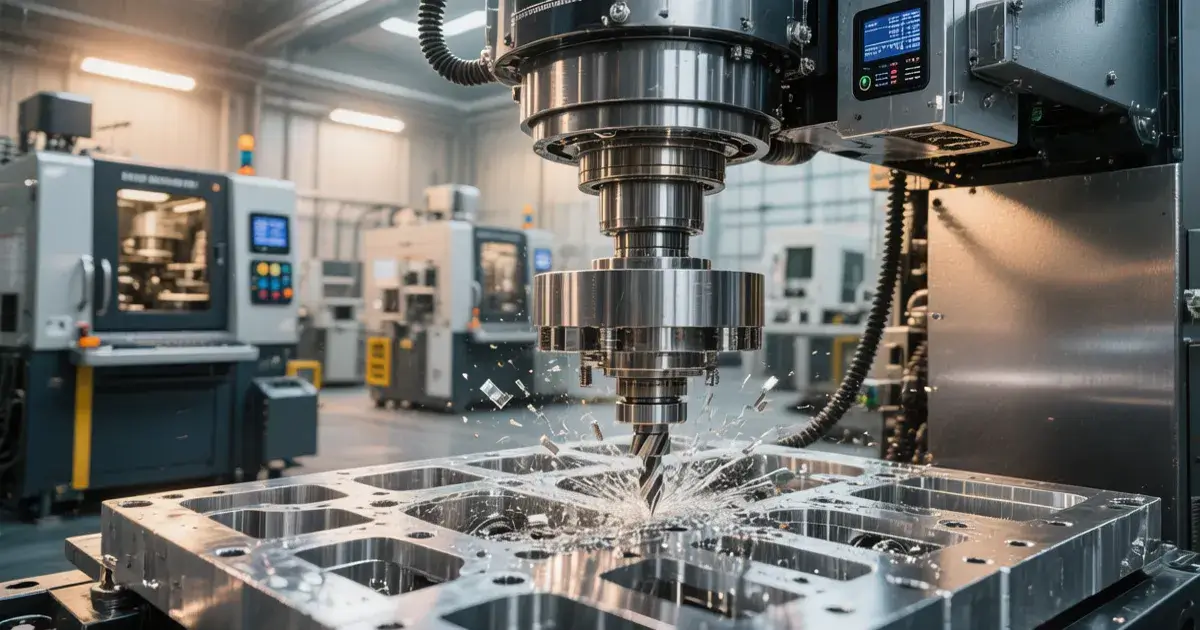
At our ISO 9001-certified facility in Yongkang, China, we machine parts from over 50 different materials every month. After years of working with OEM clients across automotive, aerospace, medical, and construction industries, we have compiled this practical guide to help you make informed material decisions for your next CNC machining project.
The Most Common CNC Machining Materials
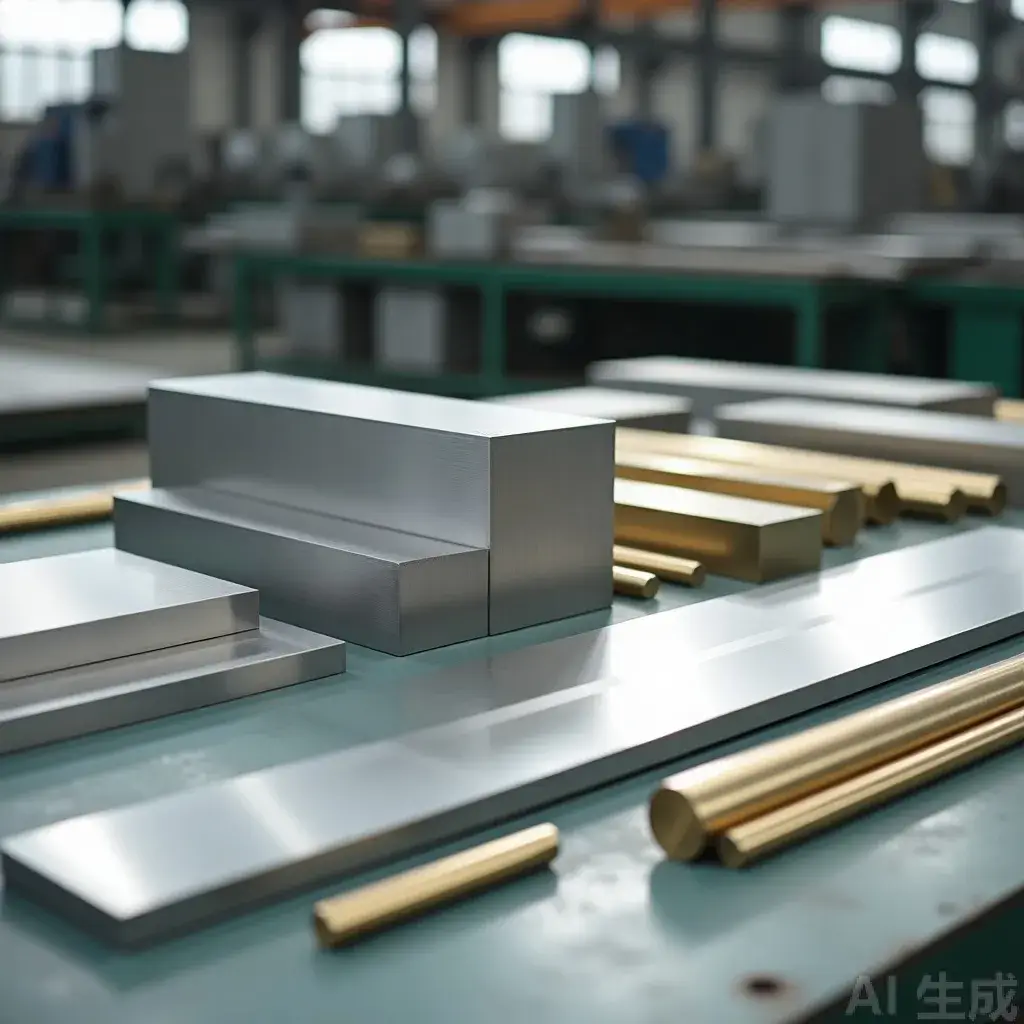
While CNC machines can process hundreds of materials, the vast majority of custom machined parts are made from the following metals and plastics. We will cover each in detail, including when to use it, what to watch out for, and how it compares to alternatives.
Aluminum Alloys
Aluminum is the single most popular material for CNC machining, accounting for roughly 40-50% of all machined parts we produce. Its combination of low density, excellent machinability, good corrosion resistance, and competitive pricing makes it the go-to choice for many applications.
6061-T6 Aluminum
This is the workhorse of aluminum machining and the most widely used alloy across all industries.
Key Properties:
- Tensile strength: 310 MPa (45,000 psi)
- Density: 2.7 g/cm³ (about one-third the weight of steel)
- Excellent corrosion resistance
- Good weldability
- Available in sheets, plates, bars, and tubes worldwide
Best Applications: Structural components, brackets, housings, enclosures, automotive parts, marine hardware, bicycle frames, and general-purpose machined parts.
Why It Is Popular: 6061-T6 offers the best balance of strength, machinability, cost, and availability. It machines cleanly with excellent surface finish and is predictable in production.
7075-T6 Aluminum
Known as “zinc alloy aluminum,” 7075 is significantly stronger than 6061 but comes with trade-offs.
Key Properties:
- Tensile strength: 572 MPa (83,000 psi) — nearly double 6061
- Density: 2.81 g/cm³
- Lower corrosion resistance than 6061
- More expensive and less available
- Harder on cutting tools
Best Applications: Aircraft structural components, high-performance automotive parts, weapon components, racing equipment, and any application where weight savings and high strength are critical.
Trade-offs: 7075 costs 2-3 times more than 6061 and is harder to source in some regions. It also wears cutting tools faster, slightly increasing machining costs.
When to Choose Aluminum
- When weight reduction is a priority
- When you need good corrosion resistance without additional surface treatment
- When tight tolerances are needed (aluminum machines very precisely)
- When cost is a concern (aluminum is 30-50% cheaper than stainless steel to machine)
Carbon Steel
Carbon steel is the backbone of industrial manufacturing. It offers excellent strength and is significantly cheaper than stainless steel, but lacks corrosion resistance.
1045 Medium Carbon Steel
Key Properties:
- Tensile strength: 585 MPa (85,000 psi)
- Density: 7.85 g/cm³
- Good machinability with proper tooling
- Can be heat treated to increase hardness
- Poor corrosion resistance (requires surface treatment)
Best Applications: Shafts, gears, axles, bolts, connecting rods, and any structural component that requires strength but not corrosion resistance.
A36 Mild Steel
Key Properties:
- Tensile strength: 400-550 MPa
- Easy to weld, cut, and machine
- Very low cost
- Not suitable for high-stress applications
Best Applications: Base plates, mounting brackets, structural supports, and non-critical components where cost is the primary concern.
When to Choose Carbon Steel
- When high strength is required at the lowest cost
- When the part will be painted, plated, or otherwise surface-treated for corrosion protection
- When the application does not involve moisture, chemicals, or outdoor exposure
- When you need a material that can be easily heat-treated for specific hardness requirements
Important Note: Carbon steel parts almost always require some form of surface treatment to prevent rust.
Stainless Steel
Stainless steel is essential for applications where corrosion resistance, hygiene, or aesthetic appearance matters.
304 Stainless Steel
Key Properties:
- Tensile strength: 515 MPa (75,000 psi)
- Excellent corrosion resistance in most environments
- Non-magnetic (austenitic)
- Good formability and weldability
- Harder to machine than aluminum or carbon steel
Best Applications: Food processing equipment, medical devices, chemical containers, architectural hardware, kitchen equipment.
316 Stainless Steel
The “marine grade” stainless steel, offering superior corrosion resistance over 304.
Key Properties:
- Tensile strength: 515 MPa (75,000 psi)
- Excellent resistance to pitting and crevice corrosion
- Contains molybdenum (2-3%) for enhanced corrosion resistance
- Slightly more expensive than 304
Best Applications: Marine hardware, pharmaceutical equipment, chemical processing components, surgical instruments, and outdoor architectural elements in coastal environments.
303 Stainless Steel
Specifically designed for improved machinability.
- Tensile strength: 620 MPa (90,000 psi)
- Free-machining grade with sulfur or selenium additions
- Easier to machine than 304 or 316
- Lower corrosion resistance than 304
Best Applications: Screw machine parts, fittings, nuts, bolts, and high-volume components where machinability is more important than maximum corrosion resistance.
304 vs 316: How to Choose
- Choose 304 for indoor applications, general-purpose corrosion resistance, and cost-sensitive projects. It is adequate for 90% of applications.
- Choose 316 for marine environments, chemical processing, medical implants, and any situation involving chlorides or salt spray.
When to Choose Stainless Steel
- When corrosion resistance is non-negotiable
- When the part will be exposed to moisture, chemicals, or outdoor conditions
- When food-contact or medical-grade requirements apply
- When an attractive, brushed, or polished surface finish is desired
Important Note: Stainless steel machining is 30-50% slower than aluminum. Expect higher machining costs and longer lead times.
Brass
Brass is an underappreciated material for CNC machining that offers unique advantages in specific applications.
C36000 Free-Cutting Brass
- Tensile strength: 360 MPa (52,000 psi)
- Exceptional machinability (100% machinability rating — the benchmark)
- Excellent corrosion resistance
- Natural gold appearance
- Non-sparking (safe for explosive environments)
- Antimicrobial properties
Best Applications: Electrical connectors, plumbing fittings, valves, musical instruments, decorative hardware.
Why Brass Is Special: Brass machines faster and cleaner than almost any other metal. For high-volume production of small, complex parts, brass is often the most economical choice despite its higher raw material cost.
Titanium
Titanium is a premium material reserved for applications where its unique combination of properties justifies the significant cost premium.
Ti-6Al-4V (Grade 5)
- Tensile strength: 950 MPa (138,000 psi)
- Density: 4.43 g/cm³ (about 60% the weight of steel)
- Exceptional strength-to-weight ratio
- Outstanding corrosion resistance
- Biocompatible
- Very difficult to machine (low thermal conductivity, work-hardens)
Best Applications: Aerospace components, medical implants, dental prosthetics, racing parts, chemical processing equipment.
What You Need to Know: Titanium machining costs 5-10 times more than aluminum and 3-5 times more than stainless steel. However, for applications where weight, strength, and biocompatibility are critical, there is no substitute.
Engineering Plastics
CNC machining is not limited to metals. Engineering plastics are increasingly popular.
Common CNC Plastics
- Nylon (PA6/PA66): Strong, wear-resistant, self-lubricating. Ideal for gears, bushings, and bearings.
- POM (Delrin/Acetal): Excellent dimensional stability, low friction. Perfect for precision parts and moving components.
- PEEK: High-performance plastic with strength approaching aluminum. Used in aerospace, medical, and semiconductor applications.
- PTFE (Teflon): Exceptional chemical resistance and lowest friction of any solid.
- UHMW-PE: Extremely tough and abrasion-resistant. Common in food processing and material handling.
When to Choose Plastics
- When electrical insulation is required
- When chemical resistance is needed
- When weight must be minimized beyond what aluminum offers
- When food contact is involved (FDA-compliant grades available)
- When low friction or self-lubrication is beneficial
Material Comparison at a Glance
| Material | Strength | Weight | Corrosion Resistance | Machinability | Relative Cost |
|---|---|---|---|---|---|
| 6061 Aluminum | Medium | Very Light | Good | Excellent | Low |
| 7075 Aluminum | High | Very Light | Moderate | Good | Medium |
| 1045 Carbon Steel | High | Heavy | Poor | Good | Very Low |
| 304 Stainless Steel | High | Heavy | Excellent | Moderate | Medium |
| 316 Stainless Steel | High | Heavy | Superior | Moderate | Medium-High |
| 303 Stainless Steel | High | Heavy | Good | Good | Medium |
| C360 Brass | Medium | Heavy | Excellent | Excellent | Medium |
| Ti-6Al-4V Titanium | Very High | Medium | Outstanding | Poor | Very High |
| POM (Delrin) | Low-Medium | Light | Good | Excellent | Medium |
| PEEK | Medium-High | Light | Excellent | Moderate | Very High |
Surface Treatments by Material
The right surface treatment can dramatically extend the life and performance of your CNC machined parts:
Aluminum Surface Treatments
- Anodizing (Type II/III): Hard, wear-resistant oxide layer. Available in clear and various colors.
- Powder Coating: Durable, attractive finish available in virtually any color.
- Chromate Conversion: Provides corrosion resistance and a good primer base for painting.
Steel Surface Treatments
- Zinc Plating: Most common and cost-effective corrosion protection for steel.
- Black Oxide: Decorative, mild corrosion protection, reduces light reflection.
- Powder Coating: Excellent durability and appearance.
- Hot-Dip Galvanizing: Maximum corrosion protection for outdoor structural steel.
Stainless Steel Surface Treatments
- Passivation: Chemical treatment that enhances the natural oxide layer.
- Electropolishing: Smooth, mirror-like finish for medical and food applications.
- Brushed/Polished: Decorative finishes for architectural and consumer applications.
Brass Surface Treatments
- Nickel Plating: Increases hardness and wear resistance.
- Chrome Plating: Decorative, highly reflective finish.
How to Specify Materials in Your RFQ
Good material specifications include:
- Material grade — e.g., “AL6061-T6” not just “aluminum”
- Standard reference — e.g., “ASTM B209” or “GB/T 3190”
- Temper/condition — e.g., “T6” for aluminum, “annealed” for steel
- Certification requirements — e.g., “mill test certificate required”
- Country of origin — if applicable for regulatory compliance
Avoid these common mistakes:
- Saying “stainless steel” without specifying the grade
- Requesting “the cheapest material”
- Not specifying if material certificates are needed
Cost-Saving Tips for Material Selection
Smart material choices can save 20-40% on your total project cost:
- Consider alternatives before defaulting to stainless steel — Carbon steel with zinc plating may cost 40-60% less than 304 stainless steel.
- Use 6061 instead of 7075 when possible — 6061-T6 is almost always the more economical choice for aluminum parts.
- Optimize material form — Bar stock is cheaper than plate. Design your parts to use standard forms.
- Consider brass for small, complex parts — Brass machines so much faster that it often ends up cheaper per part at high volumes.
- Batch similar materials — Order steel and aluminum parts separately to reduce setup costs.
- Challenge your material specification — Ask whether 304 would suffice when your drawings specify 316.
Conclusion
Choosing the right CNC machining material is not about finding the “best” material — it is about finding the optimal balance of performance, cost, and manufacturability for your specific application. Aluminum 6061-T6 handles 80% of general-purpose needs beautifully, while stainless steel, carbon steel, brass, titanium, and engineering plastics each serve critical roles in specific applications.
The most important step is communicating your requirements clearly to your manufacturer. Provide detailed material specifications, explain the operating environment, and be open to material substitution suggestions from experienced engineers.
At Avada Tools, our engineering team reviews every inquiry and provides material recommendations based on decades of machining experience. We stock a wide range of standard materials and can source specialty alloys with short lead times.
Ready to discuss your next CNC machining project? Contact our engineering team for a free quote — we review every inquiry within 24 hours.
about
avada factory
Avada Tools is an ISO 9001-certified CNC machining manufacturer based in Yongkang, China. Since 2012, we have delivered precision custom metal parts and manufacturing solutions to clients across 40+ countries worldwide.