Introduction
China remains the world’s largest hub for CNC machining services, producing precision metal parts for industries ranging from automotive and aerospace to medical devices and consumer electronics. According to recent industry reports, Chinese CNC machining suppliers serve over 60% of global OEM sourcing demand.
But here is the reality that most sourcing guides will not tell you: the gap between the best and worst CNC suppliers in China is enormous. Choosing the wrong partner can lead to delayed shipments, inconsistent quality, hidden costs, and in the worst cases, intellectual property theft.
As an ISO 9001-certified CNC machining manufacturer based in Yongkang, Zhejiang, we have seen firsthand what separates a reliable supplier from a risky one. This guide shares our insider perspective to help you make an informed decision.
Why China for CNC Machining?
Before diving into selection criteria, let us briefly address why China continues to be the top choice for custom metal parts manufacturing:
- Cost efficiency: CNC machining services in China typically cost 30–50% less than equivalent services in North America or Europe, even with shipping factored in.
- Manufacturing ecosystem: China’s industrial clusters offer complete supply chains — from raw materials to surface treatment — all within close proximity.
- Scalability: Whether you need 10 prototype parts or 100,000 production units, Chinese suppliers can accommodate virtually any volume.
- Technology advancement: Modern Chinese CNC facilities now operate multi-axis machining centers, CMM inspection equipment, and automated production lines that rival any Western factory.
However, these advantages only materialize when you partner with the right supplier. Here is how to find one.
7 Criteria for Evaluating a CNC Machining Supplier in China
1. ISO Certification and Quality Management
An ISO 9001 certification is the minimum baseline for any serious CNC machining supplier. But certification alone is not enough — you need to understand how quality is implemented on the factory floor.
What to look for:
- Valid ISO 9001 certificate (verify the certificate number with the issuing body)
- In-house quality inspection process (not outsourced to a third party)
- CMM (Coordinate Measuring Machine) or similar precision inspection equipment
- First Article Inspection (FAI) reports for new orders
- Quality documentation available upon request (material certificates, inspection reports, dimensional reports)
Red flag: A supplier who cannot provide a current ISO certificate or refuses to share quality inspection procedures.
2. Equipment and Technical Capability
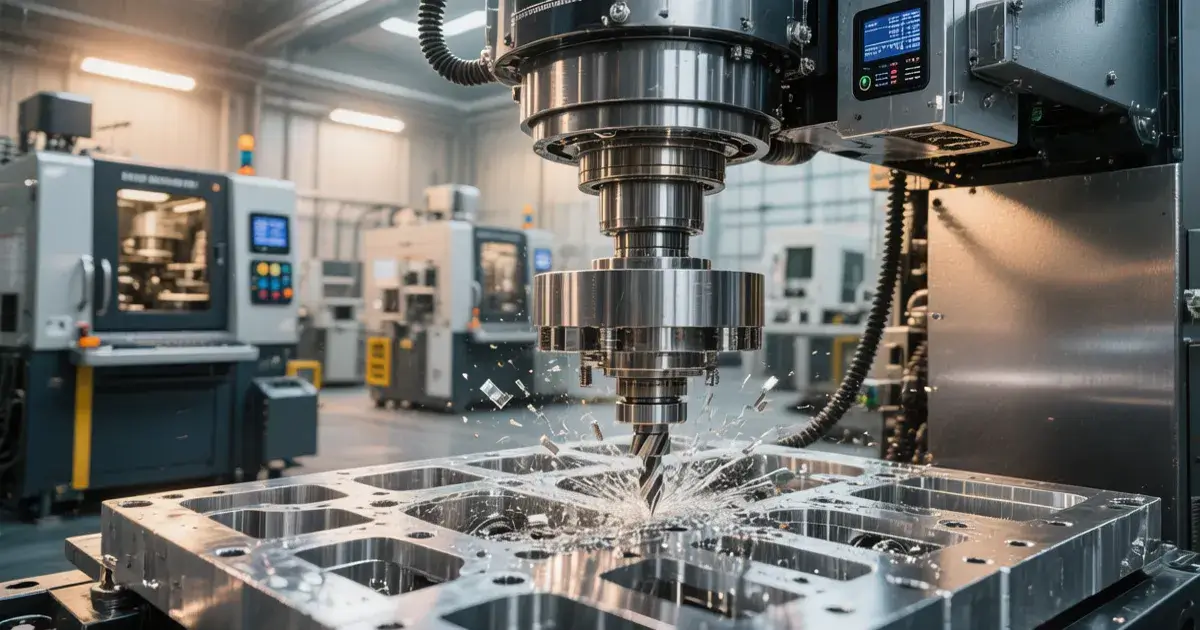
The type and condition of CNC equipment directly determines what parts a supplier can produce — and at what level of precision.
Key questions to ask:
- How many CNC machines do you operate? (A facility with 20+ machines typically indicates stable capacity)
- What is the maximum number of axes? (3-axis is standard; 4-axis and 5-axis capability enables more complex geometries)
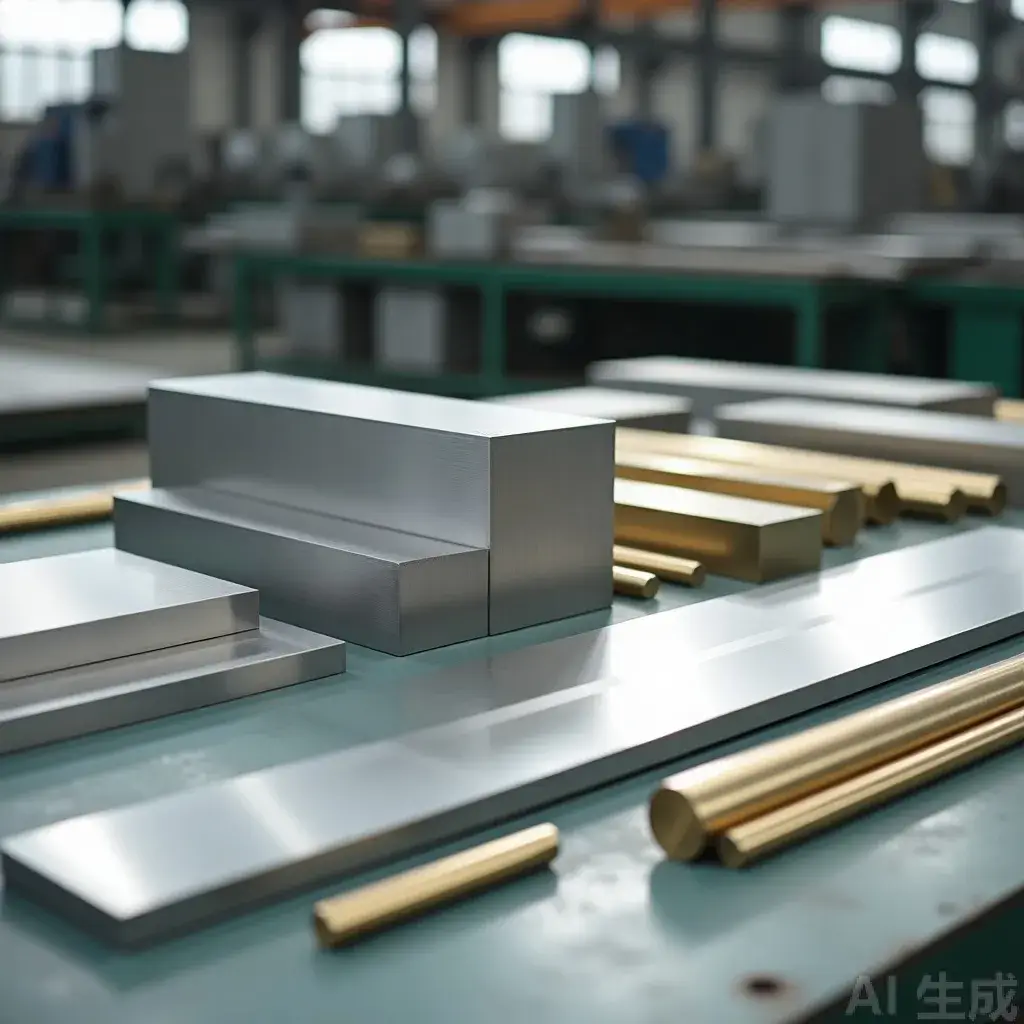
- What materials do you work with? (Reputable suppliers handle aluminum, steel, stainless steel, brass, titanium, and engineering plastics)
- What tolerances can you achieve? (Standard precision is ±0.05mm; high-precision shops achieve ±0.01mm or better)
- Do you offer surface treatments in-house? (Anodizing, powder coating, plating, passivation)
Red flag: Suppliers who claim to handle “everything” without specifying equipment details or tolerances.
3. Communication and Responsiveness
This is where many buyers underestimate the importance. Communication quality is often the strongest indicator of a supplier’s overall reliability.
Signs of good communication:
- Detailed responses to your RFQ (not just a price quote, but technical feedback on manufacturability)
- Questions about your project requirements (material grade, tolerance needs, application environment)
- Clear timelines with realistic lead times
- English-speaking project managers or sales engineers
- Willingness to provide progress photos during production
Red flag: Generic copy-paste responses, vague delivery dates, or unresponsiveness after the first few exchanges.
4. Pricing Transparency
Low price alone does not mean value. The most important factor is whether the price is transparent and complete.
A reliable supplier’s quote should include:
- Unit price based on your specified quantity
- Setup cost or tooling cost (if applicable)
- Material specification and any material surcharges
- Surface treatment costs (listed separately)
- Shipping method and estimated freight cost
- Payment terms
Red flag: A price that seems too good to be true — it usually is. Extremely low quotes often mean shortcuts in material quality, inspection, or hidden charges added later.
5. Intellectual Property Protection
For OEM clients with proprietary designs, IP protection is non-negotiable.
Protective measures to verify:
- Willingness to sign a Non-Disclosure Agreement (NDA)
- Secure file handling (encrypted file transfer, no public sharing of CAD drawings)
- Physical security at the facility (visitor policies, restricted production areas)
- No unauthorized use of your designs for other clients
Red flag: A supplier who asks to post your parts as “case studies” without explicit permission.
6. Sample and Trial Order Process
A trustworthy CNC machining supplier will always encourage you to start with a sample or small trial order before committing to large-volume production.
Best practices for the trial phase:
- Order 5–10 sample parts to verify dimensional accuracy, surface finish, and material quality
- Request a First Article Inspection (FAI) report with every dimension measured
- Test the parts in your actual application if possible
- Evaluate the supplier’s packaging quality (poor packaging often indicates poor attention to detail overall)
7. Track Record and References
Past performance is one of the best predictors of future reliability.
How to verify:
- Ask for client references (ideally in your industry or region)
- Check if the supplier has been audited by third-party inspection companies (SGS, TÜV, Bureau Veritas)
- Look for factory audit reports or certifications beyond ISO 9001 (IATF 16949 for automotive, AS9100 for aerospace)
- Review their website and case studies for evidence of real projects
The RFQ Process: How to Get Accurate Quotes
Submitting a well-prepared Request for Quote is half the battle. Here is what to include:
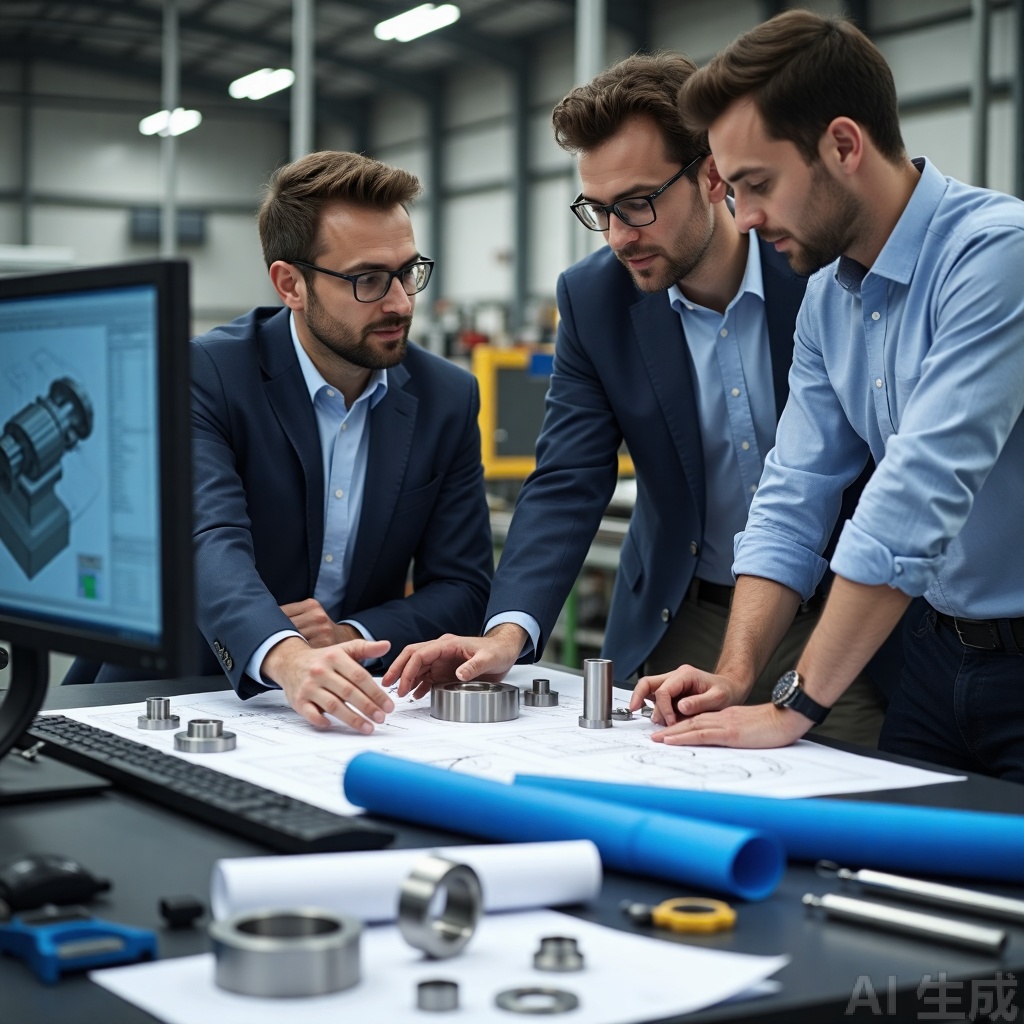
- CAD drawings in STEP, IGES, or PDF format (3D files are preferred for accurate quoting)
- Material specification — be specific (e.g., “AL6061-T6” not just “aluminum”)
- Quantity — prototype (1–50 pieces) or production volume (500+ pieces)
- Tolerance requirements — specify critical dimensions and acceptable deviations
- Surface treatment — anodizing, powder coating, plating, polishing, etc.
- Delivery timeline — when do you need the parts?
- Application — briefly describe what the parts are for (helps the supplier suggest the best manufacturing approach)
Common Mistakes to Avoid
After years of working with global OEM clients, we have observed the same mistakes repeated:
- Choosing based on price alone — The cheapest quote often leads to the highest total cost due to rework, delays, and quality issues.
- Skipping the sample phase — Going straight to mass production without verifying samples is the single biggest cause of sourcing failures.
- Not signing an NDA — Protecting your designs should be the first step, not an afterthought.
- Unclear specifications — Ambiguous drawings and tolerance requirements lead to parts that “look right” but do not function correctly.
- Ignoring communication quality — If a supplier is hard to reach before you place an order, it will only get worse after.
Conclusion
Choosing a CNC machining supplier in China does not have to be a gamble. By focusing on ISO certification, equipment capability, communication quality, pricing transparency, and IP protection, you can identify a manufacturing partner who delivers consistent quality at competitive prices.
At Avada Tools, we have been helping global OEM clients navigate the CNC machining process since 2012. Our ISO 9001-certified facility in Yongkang, Zhejiang offers CNC turning, milling, stamping, and custom fabrication with tolerances up to ±0.01mm.
Ready to start your next project? Contact our engineering team for a free quote — we review every inquiry within 24 hours and provide detailed technical feedback alongside competitive pricing.
about
avada factory
Avada Tools is an ISO 9001-certified CNC machining manufacturer based in Yongkang, China. Since 2012, we have delivered precision custom metal parts and manufacturing solutions to clients across 40+ countries worldwide.